

Table of Contents
- What You'll Need Before You Start
- Step 1: Gather Your Network Information
- Step 2: Put Your Smart Device Into Pairing Mode
- Step 3: Select Your Wireless Network and Enter Credentials
- 2.4GHz vs 5GHz for Smart Home Devices: Which Should You Choose
- Troubleshooting: Smart Home Device Won't Connect to WiFi
- Best Practices for Smart Home Network Security
- Common Mistakes to Avoid
- Frequently Asked Questions
Last Updated: September 1, 2026
What You'll Need Before You Start
Before connecting smart devices to your WiFi network, gather your wireless network name (SSID) and password, usually found on your router or in its settings. Have your smart device charged and ready, along with any companion mobile application. Position yourself near the router for the best signal strength, and keep your smartphone nearby, most smart devices rely on a companion app to complete setup.
Step 1: Gather Your Network Information
Locate your wireless network credentials by opening your router's settings through a web browser or the router manufacturer's app. Write down your SSID exactly as it appears, network names are case-sensitive, and spacing matters. Copy your password precisely; one wrong character prevents authentication.
Check whether your router broadcasts a single network name or separate 2.4GHz and 5GHz networks. Some routers combine both frequencies under one SSID, while others create distinct names like "MyNetwork-2.4G" and "MyNetwork-5G." If you've forgotten your password, you can reset your router to factory settings by holding the small reset button for 10-15 seconds, though this will disconnect all devices and require reconfiguring your entire network.
Step 2: Put Your Smart Device Into Pairing Mode
Most smart devices require activation of pairing mode before connecting to your wireless network. Hold down the dedicated pairing button for 3-5 seconds until an LED indicator changes color (often to blue or green) or begins blinking (the FTC). Check your device's manual or manufacturer's website for the exact sequence.
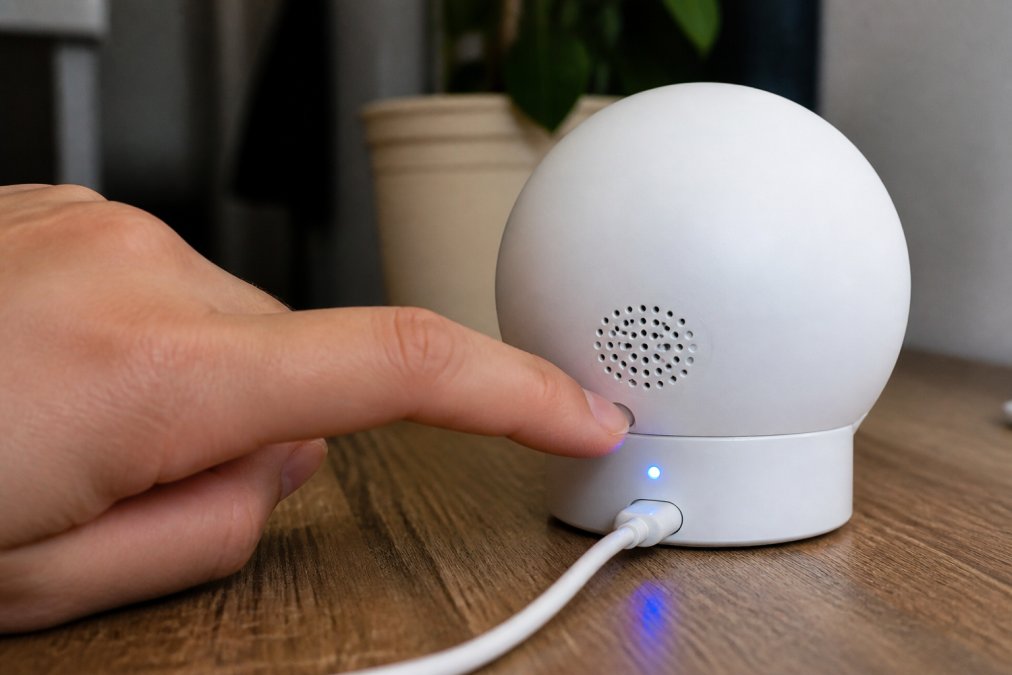
Open your device's companion mobile application now. Many apps guide you through pairing mode activation and may automatically detect nearby devices in pairing mode. Pairing mode typically lasts 2-5 minutes, so work quickly once activated (nist.gov). If the LED stops blinking or your device times out, restart the pairing process.
Step 3: Select Your Wireless Network and Enter Credentials
Once your smart device enters pairing mode, it should appear in your phone's available WiFi networks list. Open your phone's WiFi settings and select your device's name or a generic identifier like "SmartDevice-Setup." Your phone may open the device's setup portal automatically, or you may need to open the companion mobile application.
Select your network from the list presented. If your router broadcasts separate 2.4GHz and 5GHz networks, you'll see both names. When prompted, enter your WiFi password exactly as you noted it earlier. After successful authentication, your smart device connects to your network and receives an IP address from your router's DHCP server.
2.4GHz vs 5GHz for Smart Home Devices: Which Should You Choose
The 2.4GHz band has longer range and better wall penetration, making it ideal for devices placed far from your router or behind obstacles. The 5GHz band offers higher bandwidth and faster data transfer but has shorter range and weaker penetration through walls.
Most smart home IoT devices perform adequately on 2.4GHz. Devices like smart speakers, thermostats, door locks, and motion sensors don't require high bandwidth and maintain reliable connectivity even in distant rooms. If your router supports separate SSIDs for each band, create a dedicated 2.4GHz network for your smart home devices and keep your primary network on 5GHz for computers and streaming devices that benefit from higher bandwidth. For smart home devices, reliability and range matter more than speed, a stable 2.4GHz connection outperforms an unstable 5GHz connection.
Troubleshooting: Smart Home Device Won't Connect to WiFi
If your smart device won't connect, verify that you've entered your WiFi password correctly, passwords are case-sensitive, so check that Caps Lock isn't accidentally enabled. Confirm that your device is within reasonable range of your router. Try moving the device closer to your router temporarily to test connectivity.
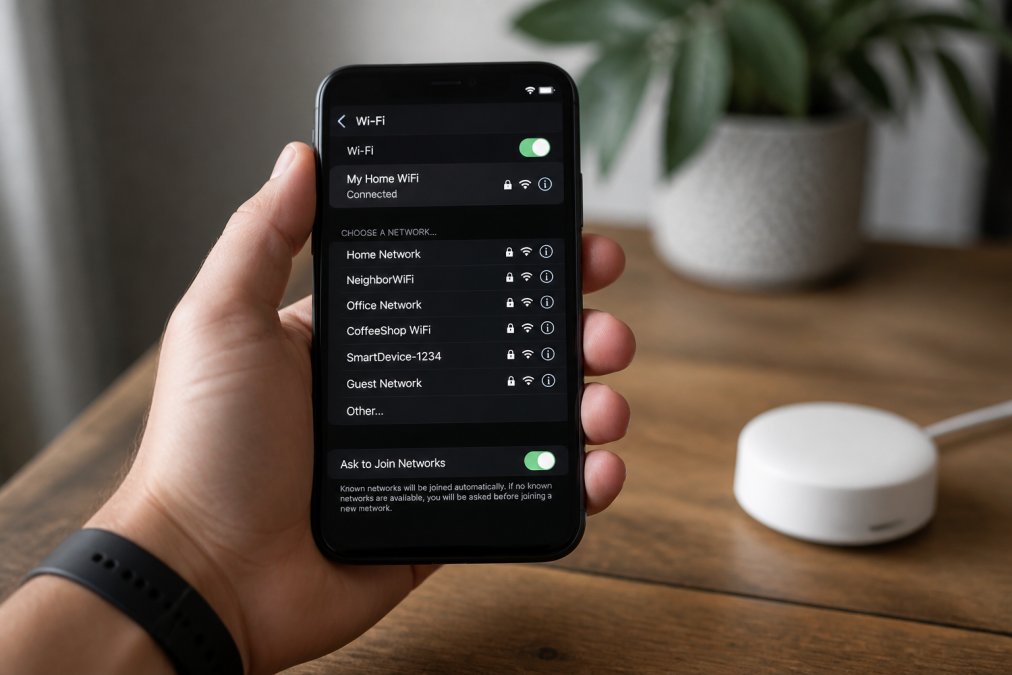
Check your router's WiFi settings to ensure it's broadcasting your network name. Some routers hide the SSID, requiring you to manually enter the network name instead of selecting it from a list.
Rebooting Your Router and Device
Power off your smart device completely and wait 30 seconds, then power it back on. Next, restart your router by unplugging the power cable, waiting 30 seconds, and plugging it back in. This cold reboot clears the router's cache and allows it to reinitialize all settings. Most routers take 2-3 minutes to fully restart. After both devices restart, attempt to connect your smart device to WiFi again.
Checking Signal Strength and Bandwidth
Weak signal strength causes intermittent connections or complete failure. Use a WiFi analyzer app on your smartphone to check signal strength at your device's location. Anything weaker than -70 dBm indicates marginal signal (fcc.gov). Move your router to a more central location or elevate it higher off the ground. Walls, metal objects, and other obstacles degrade signal strength.
Bandwidth congestion can also prevent connections. If many devices simultaneously use your network, disconnect devices you're not actively using or wait until network traffic decreases before attempting to connect your smart device.
Resetting to Factory Settings
If your device still won't connect after rebooting and checking signal strength, perform a factory reset. Locate the small reset button on your device and hold it for 10-15 seconds. The LED indicator should flash rapidly, indicating a reset is in progress. A factory reset clears all stored network credentials and returns the device to its original state. After the reset completes, the device re-enters pairing mode automatically, and you can attempt the connection process again from the beginning.
Best Practices for Smart Home Network Security
Change your router's default password immediately, default credentials are publicly known and allow unauthorized access. Enable WPA3 encryption on your router if available, or use WPA2 as a minimum standard. These encryption protocols protect data transmitted between your device and router from interception.
Create a separate network for your smart home devices if your router supports guest networks. This isolates IoT traffic from your primary network, limiting potential damage if a smart device becomes compromised. Disable remote access and cloud connectivity features unless you specifically need them. Update your device firmware regularly, manufacturers release security patches that address vulnerabilities. Most smart devices support automatic updates, which you should enable.
Change your router's default network name from the manufacturer's identifier to something generic that doesn't reveal your router model. Use a unique, strong password for your network that differs from passwords used for other online accounts.
Common Mistakes to Avoid
The most frequent error is attempting to connect to the wrong network. If your router broadcasts both 2.4GHz and 5GHz bands, you might select the 5GHz network when your device requires 2.4GHz. Check your device documentation to confirm which band it supports.
Don't assume your device will automatically reconnect to WiFi after losing the network connection. Check your device's settings periodically to ensure it's still connected and receiving a stable signal. Avoid changing your WiFi network name or password without updating your connected devices, existing devices retain old credentials and fail to reconnect.
Don't place your router in a corner, closet, or enclosed space. Position your router in a central, elevated location away from metal objects and dense materials. Avoid connecting too many devices to a single 2.4GHz band. If you have more than 10-15 devices, distribute them across 2.4GHz and 5GHz bands, or consider adding a second router to expand your network.
Connecting smart devices to your WiFi network becomes straightforward once you understand the fundamental steps and common pitfalls. At The Daily Drop by Ed Rivera, we know that affordable smart home technology should work reliably without complicated setup processes. By following this guide, you'll establish a stable connection for your smart devices and build a foundation for expanding your smart home ecosystem. Check The Daily Drop by Ed Rivera regularly for new deals on smart home devices and network equipment that can enhance your setup.
Frequently Asked Questions
Why won't my smart home device won't connect to WiFi after I set it up?
The most common causes are incorrect network credentials, incompatible frequency bands, or weak signal strength. Start by verifying your SSID and password are entered correctly. If your router broadcasts both 2.4GHz and 5GHz bands, check whether your device requires the 2.4GHz network specifically. Move the device closer to your router to test signal strength, then reboot both the device and router. If problems persist, factory reset the device and try the pairing process again from the beginning.
Do smart home devices require 2.4GHz or 5GHz WiFi networks?
Most smart home devices require 2.4GHz networks because they have older WiFi chipsets with lower power consumption. The 2.4GHz band has better range and wall penetration than 5GHz, making it ideal for IoT devices placed throughout your home. However, some newer smart devices support 5GHz or dual-band operation. Check your device's manual or specifications before connecting. If your router broadcasts both bands under the same SSID, separate them into distinct network names so your device can connect to the correct frequency.
How do I put a smart device into pairing mode?
Pairing mode activation varies by manufacturer. Most devices require holding a dedicated pairing or reset button for 3-5 seconds until an LED light flashes or changes color. Some devices enter pairing mode automatically when powered on for the first time. Consult your device's manual or the manufacturer's mobile application for exact instructions. Once in pairing mode, your device broadcasts its SSID and becomes discoverable by your router and smartphone. Pairing mode typically times out after 5-10 minutes, so initiate the WiFi connection promptly.
What are the best security practices for smart home devices on my WiFi network?
Use WPA3 encryption if your router supports it, or WPA2 as a minimum standard. Create a strong, unique password for your WiFi network using a mix of uppercase, lowercase, numbers, and special characters. Consider setting up a separate guest network for IoT devices to isolate them from computers and phones containing sensitive data. Enable MAC address filtering to allow only approved devices. Keep your router firmware updated and disable remote management features. Regularly change default passwords on any smart devices that have their own login credentials.
This article was written using GrandRanker