

Table of Contents
- Where to Buy Quality Apparel for Cheap: Top Retailers
- Affordable Clothing Brands That Don't Sacrifice Quality
- How to Find Good Quality Clothes for Less: Smart Shopping Strategies
- Thrift Store Shopping Tips and Secondhand Clothing Online
Last Updated: July 26, 2026
Where to buy quality apparel for cheap is a challenge many shoppers face when they want stylish, durable clothing without overspending. At The Daily Drop by Ed Rivera, we understand that quality and affordability don't have to be mutually exclusive. This guide breaks down the best retailers, platforms, and strategies to help you find clothing that lasts while keeping your budget intact.
Where to Buy Quality Apparel for Cheap: Top Retailers
TJ Maxx offers prices 20-60% below department store levels with constantly changing inventory and comparison pricing on tags showing exact savings.
Marshalls delivers the same 20-60% savings on surplus merchandise from major brands with unpredictable inventory.
Nordstrom Rack brings designer items within reach at discounts up to 70% off, with both online and in-store options.
H&M delivers trend-driven apparel at low price points with new styles constantly arriving, though quality can be inconsistent.
Old Navy focuses on casual, family-friendly clothing with frequent sales and inclusive sizing across petite, tall, and plus-size options.
Affordable Clothing Brands That Don't Sacrifice Quality
ThredUp operates as one of the largest online consignment platforms, with over 2.4 million items listed and nearly 100,000 added daily. Each item is inspected and graded by condition, with sellers receiving 5-80% payouts depending on item value.
Poshmark functions as a peer-to-peer marketplace with over 200 million items across 5,000+ brands. The ability to negotiate prices with sellers adds another layer of savings potential.
The RealReal specializes in authenticated luxury consignment, offering designer pieces at substantial discounts with all items authenticated by in-house experts.
(https://1262rs-0w.myshopify.com/blogs/news/avoid-overpaying-lifestyle-products)]How to Find Good Quality Clothes for Less: Smart Shopping Strategies
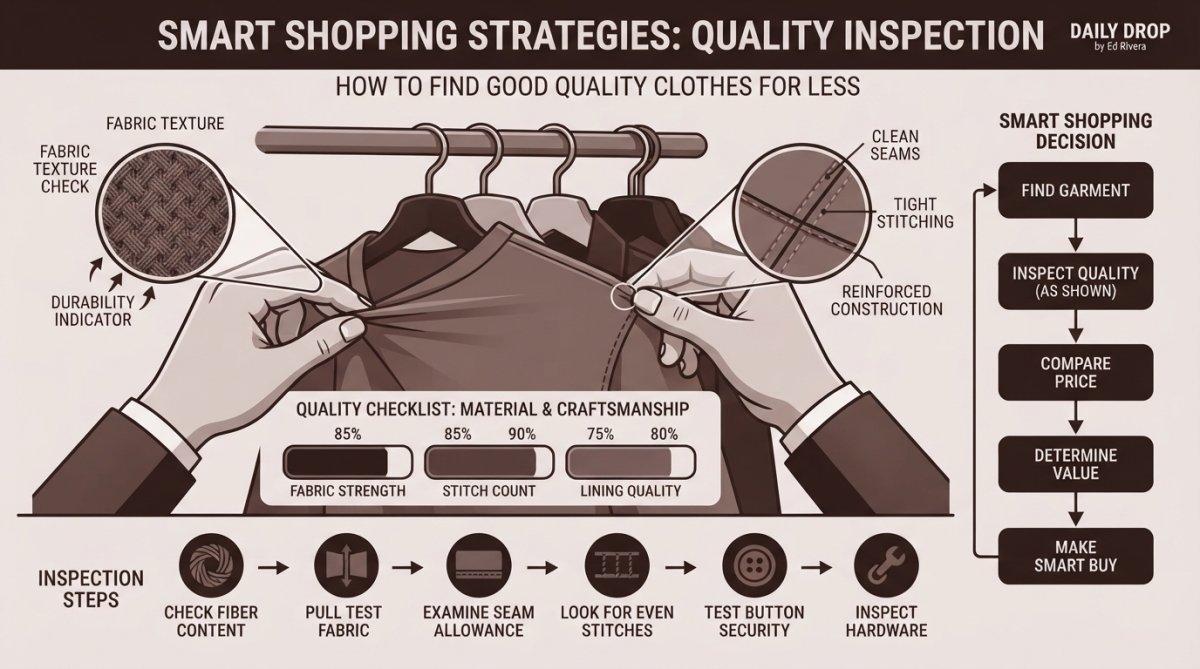
Inspect fabric composition carefully. Natural fibers like cotton, linen, wool, and silk age better than synthetics. Check tags for fiber content; 100% synthetic materials often feel cheap and wear poorly.
Examine construction details before buying. Seams should be straight and tightly stitched with no loose threads. Hems should be even and secure. Check zippers for smooth operation and buttons for firm attachment.
Calculate cost-per-wear to justify investment. A $60 jacket worn 100 times costs $0.60 per wear, while a $20 shirt worn five times costs $4 per wear. This helps distinguish between genuine bargains and false economy.
Shop end-of-season clearance sales strategically. Retailers discount heavily at season's end, offering 50-70% savings. Shopping off-season means finding winter coats in March or summer dresses in September.
Use price comparison and alerts. Many retailers allow you to set price alerts on items you're watching, and following brands on social media often reveals exclusive discount codes.
| Strategy | Best Time | Expected Savings | Effort Level |
|---|---|---|---|
| End-of-season clearance | 4-8 weeks after season ends | 50-70% | Low |
| Secondhand platforms | Year-round | 40-70% | Medium |
| Outlet retailers | During promotions | 20-60% | Low |
| Price alerts | Ongoing | 15-40% | Low |
| Thrift stores | Year-round | 70-90% | High |
Thrift Store Shopping Tips and Secondhand Clothing Online
Physical thrift stores like Goodwill and Salvation Army offer rock-bottom prices, often under $10 per item, with immediate gratification and firsthand quality inspection. Online secondhand platforms like ThredUp and Poshmark eliminate the time investment while maintaining significant savings. According to ThredUp's 2026 Resale Report, the secondhand apparel market continues growing as consumers seek sustainable and affordable options.
Know what to look for in secondhand pieces. Examine photos carefully for stains, pilling, or damage. Read condition descriptions thoroughly and check return policies before purchasing.
Focus on basics and timeless styles in secondhand shopping. Classic pieces remain wearable longer than trendy items from previous seasons.
Verify brand authenticity on luxury platforms. The RealReal's authentication process protects you, but on peer-to-peer platforms like Poshmark, counterfeits exist. Research brand details and ask sellers detailed questions about provenance.
Smart Shopping for Specific Demographics
For shoppers in their 30s and beyond, prioritize pieces that work across multiple occasions. Quality basics, neutral-colored pants, and structured jackets form a functional wardrobe foundation. Nordstrom Rack and Marshalls excel at offering these pieces at discount prices.
For plus-size shoppers, Old Navy and H&M offer extensive size ranges with the same pricing as straight sizes. ThredUp and Poshmark include plus-size filters, expanding secondhand options significantly.
For budget-conscious families, Old Navy's frequent sales and inclusive sizing make it practical for outfitting multiple people. Thrift stores offer unbeatable prices for children's clothing, which gets outgrown quickly.
For sustainable-minded shoppers, secondhand platforms align values with savings. According to EPA Sustainable Materials Management, textile waste represents a significant environmental challenge. Buying secondhand diverts clothing from landfills while reducing demand for new production.
Fast Fashion vs. Quality Investment Pieces
Fast fashion retailers like H&M and Old Navy excel at affordable trend pieces you'll wear for one season. Quality investment pieces cost more upfront but deliver better cost-per-wear over time. A balanced approach combines both: buy trendy items from affordable retailers to experiment, and invest in quality basics and outerwear that form your wardrobe foundation.
Finding where to buy quality apparel for cheap requires understanding both where to shop and how to evaluate what you're buying. The Daily Drop by Ed Rivera makes this easier by curating deals across multiple categories, including apparel, so you can find quality items at competitive prices without endless searching. With new inventory added regularly and bulk pricing available for larger purchases, The Daily Drop by Ed Rivera simplifies the hunt for real value. Start with the retailers and strategies outlined above, and you'll build a wardrobe that looks good, lasts longer, and respects your budget.
Frequently Asked Questions
What's the difference between buying from The Daily Drop and platforms like Temu or Wish?
The Daily Drop curates quality apparel with transparent pricing and reliable customer service, unlike drop-shipping platforms where quality control is inconsistent. The Daily Drop offers bulk pricing for larger orders and consistently updated inventory of vetted products. Returns and customer support are prioritized, whereas international platforms often have lengthy shipping times and limited recourse for defective items.
How can I tell if clothing is good quality when shopping for cheap apparel?
Inspect fabric composition, natural fibers like cotton and wool typically last longer than synthetic blends. Check seams for tight, even stitching and examine hems for durability. Look for reinforced stress points on buttons and zippers. Read consumer reviews on the retailer's site. Compare price points across retailers; if a garment seems unusually cheap compared to similar items, quality may suffer. Evaluate weight and drape, quality apparel feels substantial, not flimsy.
Are thrift stores and secondhand clothing online platforms really good for finding quality apparel?
Yes, thrift stores and resale platforms like ThredUp and Poshmark offer significant savings on quality apparel. Items are pre-owned but often gently used or unworn. Secondhand shopping extends garment lifecycles and supports sustainable fashion. Filter by condition ratings, 'Like New' or 'Gently Used' items typically deliver better value. Resale platforms authenticate items and include detailed photos, making it easier to assess quality before purchasing than traditional thrift stores.
What is cost-per-wear and how does it help me buy quality apparel for cheap?
Cost-per-wear divides the garment's price by how many times you'll wear it. A $50 blazer worn 100 times costs $0.50 per wear; a $15 trendy top worn twice costs $7.50 per wear. Investing in durable, versatile basics and wardrobe essentials lowers cost-per-wear over time. This framework helps you prioritize spending on quality pieces you'll actually wear repeatedly, rather than cheap impulse purchases that sit unused. It shifts focus from lowest price to best value for money.
This article was written using GrandRanker