

Table of Contents
- The Real Cost Comparison: DIY vs. Professional Service
- Beginner Car Maintenance Tools List: What You Actually Need
- Best Car Gadgets Under 50 Dollars for DIY Maintenance
- Common Car Maintenance Mistakes That Cost You Money
- Warranty, Liability, and Hidden Risks of DIY Work
- When DIY Car Maintenance Makes Sense (and When It Doesn't)
- Conclusion
Last Updated: August 30, 2026
The Real Cost Comparison: DIY vs. Professional Service
Is DIY car maintenance worth it? The answer depends on what you're willing to trade: your time, risk tolerance, and tool investment against professional labor costs. For routine tasks like oil changes and air filter replacements, the math often favors DIY. For complex diagnostics or warranty-sensitive work, professionals make more sense.
Professional mechanics charge $75 to $150 per hour (bls.gov). An oil change costing $20 in parts might run $60 to $100 at a dealership. Over a year, these savings accumulate. However, this shifts dramatically if you need specialized diagnostic tools or if mistakes require costly repairs.
The real cost includes hidden expenses: tools ($100-$200 for a floor jack, $50-$100 for jack stands, $30-$200 for an OBD-II scanner), time investment, and liability if something goes wrong. For a single oil change, these seem expensive. Over five years of routine maintenance, they justify themselves.
Professional service comes with guarantees. If a mechanic makes a mistake, they're liable. If you damage something while working under your car, you're responsible. This liability gap matters more on newer vehicles, where a single misdiagnosis can void your warranty.
Beginner Car Maintenance Tools List: What You Actually Need
Starting DIY car maintenance requires a focused toolkit with essentials. The minimum viable set includes a floor jack, jack stands, a basic socket set, a torque wrench, and a multimeter for electrical diagnostics.
A floor jack is non-negotiable. Never work under a car supported only by a jack. Jack stands are your safety net, a jack stand set ensures your vehicle stays secure while you work underneath.
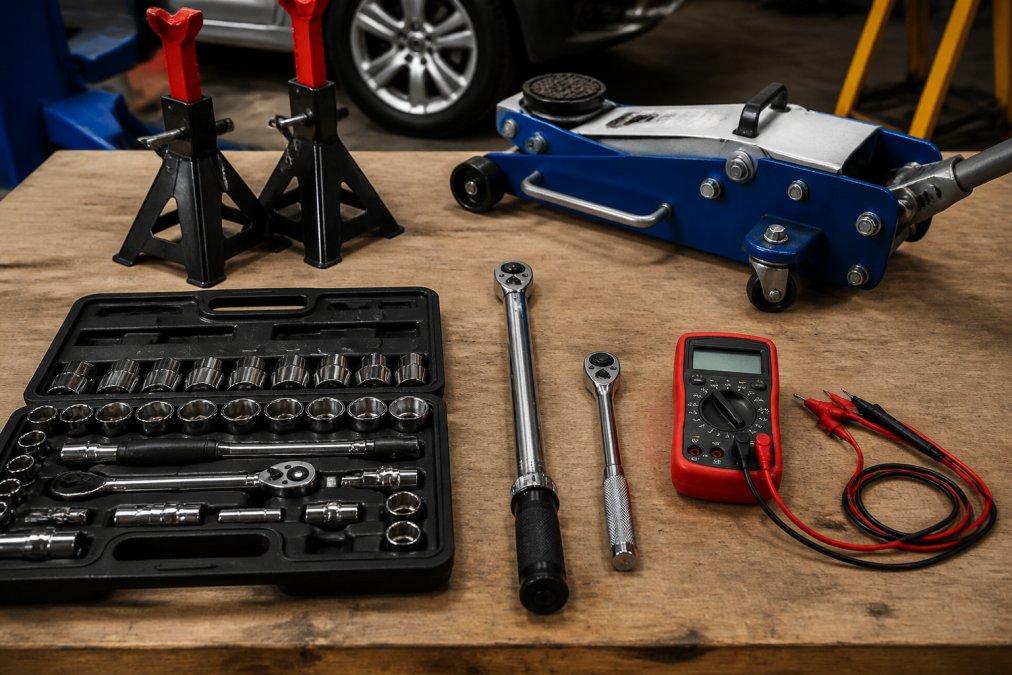
A 40 to 80-piece socket set covers 90% of common tasks. A torque wrench ensures you tighten bolts to manufacturer specifications, critical for safety. An auto-ranging multimeter diagnoses electrical issues, tests battery health, and troubleshoots check engine lights.
An OBD-II code reader reads and clears diagnostic trouble codes, preventing unnecessary repairs based on guessing. Documentation matters equally, Haynes repair manuals or ALLDATAdiy subscription access provide step-by-step instructions and factory repair information, preventing costly mistakes.
Best Car Gadgets Under 50 Dollars for DIY Maintenance
Budget-friendly tools can get you started without massive upfront investment. An OBD-II code reader under $50 reads codes and clears the check engine light, saving $100+ in diagnostic fees. A basic multimeter in the $20 to $50 range handles voltage, current, and resistance testing for electrical troubleshooting.
Socket sets, wrenches, and screwdriver kits under $50 are sufficient for routine work. Determine whether your vehicle uses metric or imperial tools and start there. Specialty items like oil drain pans, funnel kits, and filter wrenches cost $15 to $30 and prevent spills that damage your driveway.
The Daily Drop by Ed Rivera regularly features quality tools in this price range, making it possible to build a functional toolkit without spending hundreds upfront. Start with essentials and add specialized tools as you tackle more complex projects.
Common Car Maintenance Mistakes That Cost You Money
DIY failures typically fall into three categories: using wrong tools, skipping critical steps, and ignoring manufacturer specifications.
Using the wrong tool is expensive. Trying to remove a stuck bolt with an undersized wrench strips the bolt head, requiring professional extraction. A $5 specialty socket prevents a $500 repair. Skipping safety steps creates the most serious problems, not using jack stands, working without proper lighting, or failing to disconnect the battery before electrical work can cause injury or expensive damage.
Ignoring torque specifications causes bolt failures and leaks. Over-tightening strips threads; under-tightening causes leaks. A torque wrench costs $30 to $100 and prevents mistakes costing thousands. Mixing different fluid types damages seals and requires expensive system repairs. Always check your owner's manual for exact specifications.
Warranty, Liability, and Hidden Risks of DIY Work
Modern vehicles have complex systems, and unauthorized work can void your warranty. Federal law (the Magnuson-Moss Warranty Act) prohibits manufacturers from voiding your warranty simply because you performed maintenance yourself (the FTC). However, if your DIY work directly causes a failure, the manufacturer can deny coverage for that specific component.
The liability question is more serious. If you injure yourself while working on your vehicle, your homeowner's insurance typically doesn't cover it. A professional mechanic carries liability insurance protecting both them and you.
Environmental disposal regulations require proper handling of used oil, coolant, batteries, and hazardous materials (the EPA). Dumping these materials violates federal law and can result in fines. Many shops dispose of materials for free or a small fee.
Insurance implications exist but are often overlooked. Some policies exclude coverage for accidents caused by unauthorized maintenance. If you perform brake work incorrectly and cause an accident, your insurer might deny the claim.
Modern vehicle complexity is the real game-changer. Vehicles from 2010 onward have computerized systems requiring specialized diagnostic tools. An engine light might indicate a faulty oxygen sensor or a loose gas cap, you can't know without proper diagnostics.
When DIY Car Maintenance Makes Sense (and When It Doesn't)
DIY car maintenance makes sense for routine preventative maintenance on vehicles you understand. Oil changes, air filter replacements, fluid checks, and tire rotations are straightforward tasks with low risk. Routine servicing on vehicles under 10 years old with under 100,000 miles is ideal territory for DIYers.
DIY work doesn't make sense for safety systems, complex diagnostics, or warranty-sensitive repairs. Brake work, suspension repairs, and transmission problems require professional expertise. Electrical diagnostics on modern vehicles require specialized scan tools.
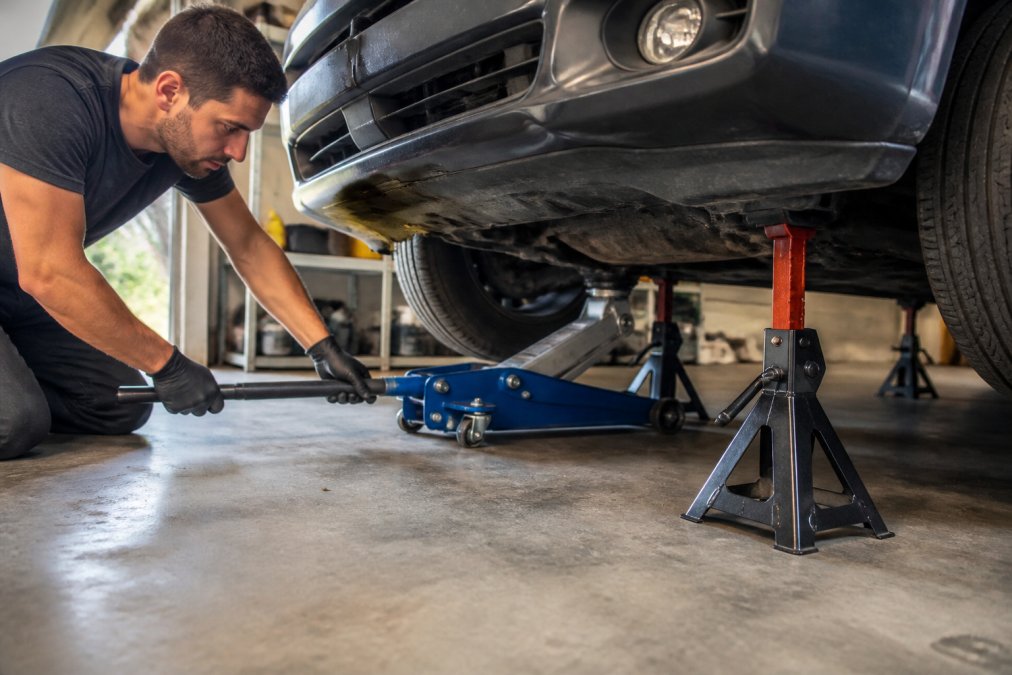
The time investment matters more than people realize. An experienced mechanic completes a task in 30 minutes. Your first attempt might take three hours. If you value your time at $20 per hour, that three-hour job costs you $60 in time alone.
Be honest about your skill level. If you've never changed oil, start there. If you've changed oil successfully ten times, you're ready for air filters and spark plugs. If you're comfortable with basic mechanical work, tire rotations and brake pad replacement are reasonable next steps.
A practical framework: DIY makes sense when the task is routine, the risk is low, you have proper tools, and you have detailed documentation. Hire a professional when the task involves safety systems, you lack proper diagnostic tools, the work is warranty-sensitive, or your skill level is below what the task demands.
The question of whether DIY car maintenance is worth it has no universal answer. For budget-conscious homeowners who approach the work systematically and honestly assess their limitations, DIY saves money on routine maintenance. For those without proper tools, adequate documentation, or mechanical competence, professional service is the better choice.
The Daily Drop by Ed Rivera makes building a functional DIY toolkit affordable by offering quality tools at competitive prices. Start with essentials, build your skills gradually, and know when to defer to professionals. That balanced approach keeps your vehicle running, your wallet fuller, and your safety intact.
=== FAQ ANSWERS (audit these too, same rules) ===
[1] Q: Is it worth it to do your own car maintenance? A: DIY car maintenance saves money on labor costs, but only if you have the right tools, knowledge, and time. Simple tasks like oil changes and tire rotations typically cost $20-$50 in supplies versus $100-$200 at a shop. However, modern vehicles are increasingly complex, and mistakes can be costly. Success depends on your mechanical skill level, the specific task, and your vehicle's age and condition.
[2] Q: What are the most common car maintenance mistakes beginners make? A: Beginners often skip safety precautions like using jack stands, over-tighten bolts without a torque wrench, ignore manufacturer specifications in the service manual, and attempt repairs beyond their skill level. Other frequent errors include using incorrect fluid types, not properly diagnosing problems before replacing parts, and neglecting preventative maintenance schedules. These mistakes can damage your vehicle, void warranties, or create safety hazards.
[3] Q: Does DIY car maintenance void your vehicle warranty? A: Not automatically. Federal law protects your warranty even if you perform your own maintenance, as long as you follow the manufacturer's specifications and use approved parts. However, if DIY work directly causes a failure, the manufacturer can deny coverage for that specific repair. Always consult your warranty documentation and use OEM-approved parts and procedures to stay protected.
[4] Q: What tools do I need to start with basic car maintenance? A: Essential beginner tools include a floor jack and jack stands for safety, a socket set with wrenches, a torque wrench for proper fastener tightness, an OBD-II code reader to diagnose check engine lights, and a multimeter for electrical testing. A service manual specific to your vehicle is critical. Many of these tools cost under $50 individually at retailers or through The Daily Drop, which offers competitive pricing on automotive tools and gadgets.
Frequently Asked Questions
Is it worth it to do your own car maintenance?
DIY car maintenance saves money on labor costs, but only if you have the right tools, knowledge, and time. Simple tasks like oil changes and tire rotations typically cost $20-$50 in supplies versus $100-$200 at a shop. However, modern vehicles are increasingly complex, and mistakes can be costly. Success depends on your mechanical skill level, the specific task, and your vehicle's age and condition.
What are the most common car maintenance mistakes beginners make?
Beginners often skip safety precautions like using jack stands, over-tighten bolts without a torque wrench, ignore manufacturer specifications in the service manual, and attempt repairs beyond their skill level. Other frequent errors include using incorrect fluid types, not properly diagnosing problems before replacing parts, and neglecting preventative maintenance schedules. These mistakes can damage your vehicle, void warranties, or create safety hazards.
Does DIY car maintenance void your vehicle warranty?
Not automatically. Federal law protects your warranty even if you perform your own maintenance, as long as you follow the manufacturer's specifications and use approved parts. However, if DIY work directly causes a failure, the manufacturer can deny coverage for that specific repair. Always consult your warranty documentation and use OEM-approved parts and procedures to stay protected.
What tools do I need to start with basic car maintenance?
Essential beginner tools include a floor jack and jack stands for safety, a socket set with wrenches, a torque wrench for proper fastener tightness, an OBD-II code reader to diagnose check engine lights, and a multimeter for electrical testing. A service manual specific to your vehicle is critical. Many of these tools cost under $50 individually at retailers or through The Daily Drop, which offers competitive pricing on automotive tools and gadgets.
This article was written using GrandRanker