

Table of Contents
- Start With a Waste Audit
- How to Save Money on Groceries 2026 and Cut Food Waste
- How to Reduce Plastic Usage at Home
- Zero Waste Kitchen Essentials for Beginners
- Buy in Bulk and Use Refillable Systems
- Master Recycling Habits and Contamination Prevention
- Waste Reduction for Renters and Apartment Dwellers
- Reduce Digital Waste and Household Efficiency
- Frequently Asked Questions
Last Updated: September 4, 2026
Household waste reduction is a practical strategy for lowering your environmental impact and saving money. The average American family generates a significant amount of trash each year, with a large portion coming from food scraps, packaging, and single-use items. This guide from The Daily Drop by Ed Rivera outlines seven actionable steps to reduce household waste in 2026, focusing on strategies that are simple to implement without requiring a complete lifestyle overhaul. You will learn how to conduct a waste audit, master meal planning, and adopt smarter shopping habits that cut down on what you throw away.
The most effective way to reduce household waste is to stop it from entering your home in the first place. By focusing on prevention through mindful purchasing and consumption, you can address the problem at its source. Below, we will show you exactly how to apply these principles to your kitchen, bathroom, and digital life, creating a more efficient and sustainable household.
Start With a Waste Audit
A waste audit is the process of sorting your trash for a week to identify exactly what you are throwing away. This is the single most effective first step because it replaces guesswork with data, showing you precisely which categories of waste dominate your bin. You cannot effectively solve a problem you have not measured.
To perform the audit, designate one bag for your regular trash and one for recycling over a seven-day period. At the end of the week, put on gloves and sort the contents into categories: food scraps, packaging, paper, plastics, and miscellaneous items. Note which items are recyclable but were contaminated, and which are food waste that could have been composted. This process takes about an hour but provides a clear roadmap for your reduction efforts.
The results often surprise people. Many households discover that organic waste and packaging materials make up the majority of their trash, not the non-recyclable items they assumed. This insight directly informs which of the following steps you should prioritize.
How to Save Money on Groceries 2026 and Cut Food Waste
The connection between your grocery budget and your trash can is direct: wasted food is wasted money. The average household discards a substantial portion of the groceries it purchases, which is why reducing food waste is one of the highest-impact changes you can make. This approach aligns with the broader goal to reduce household waste while delivering immediate financial returns.
Meal Planning and Strategic Shopping
Meal planning is the practice of deciding what you will eat for the week before you go to the store. Start by checking your pantry and fridge for items you already own, then plan meals around those ingredients. Create a shopping list based on that plan and commit to buying only what is on it.
This strategy prevents impulse purchases and overbuying, which are the primary drivers of food waste. A common mistake is buying fresh produce in bulk without a plan for using it before it spoils. Instead, purchase only what your meal plan requires for the next few days, and consider frozen alternatives for items you use less frequently.
Composting Food Scraps and Organic Waste
Composting is the process of turning organic waste like fruit peels, coffee grounds, and eggshells into nutrient-rich soil. Even if you do not have a garden, composting keeps a significant portion of your trash out of the landfill. EPA guidelines on composting at home states that food scraps and yard waste together make up a large percentage of what we throw away.
For apartment dwellers, countertop compost bins with charcoal filters contain odors effectively. If you lack outdoor space, check if your city offers a curbside organics collection program or if a local community garden accepts food scraps. The key is to make composting as convenient as your regular trash bin, so it becomes a habit rather than a chore.
Repurposing Leftovers and Creative Cooking
Repurposing leftovers is a creative approach that turns one meal into multiple dishes. Roast a whole chicken on Sunday, then use the leftovers for sandwiches, salads, and soup throughout the week. Vegetable scraps can be saved in a freezer bag and boiled into stock.
This practice is a cornerstone of household waste management that reduces both food waste and the energy used for cooking. Designate one night a week as "use-it-up" night, where the meal consists entirely of leftovers and ingredients nearing their expiration date. This simple rotation prevents food from languishing in the back of your fridge.
How to Reduce Plastic Usage at Home
Reducing plastic usage at home is a high-impact strategy because plastic packaging is one of the most visible and persistent forms of household waste. The goal is not perfection but progress, focusing on the most common sources of single-use plastic in your daily routine. Small changes in this area contribute significantly to reducing packaging waste and your overall carbon footprint.
Eliminate Single-Use Plastics
Single-use plastics include water bottles, plastic grocery bags, straws, and disposable cutlery. The most effective way to eliminate them is to identify your most frequent purchases and find reusable alternatives. If you buy bottled water weekly, invest in a refillable bottle and a filter pitcher.
Start with a quick inventory of your trash from the waste audit. You will likely see a pattern of specific single-use items. Target those first, and you will see an immediate reduction in your bin's volume. This is one of the most straightforward waste reduction strategies available.
Switch to Reusable Containers and Cloth Bags
Reusable containers and cloth bags are the workhorses of a low-waste home. Glass or stainless steel containers are durable, non-toxic, and can store leftovers, pantry items, and packed lunches. Cloth produce bags replace the thin plastic bags used for fruits and vegetables at the grocery store.
Keep a set of cloth bags in your car and by your front door to ensure you never leave without them. National Geographic's guide to reducing plastic pollution highlights that individual actions, when multiplied across millions of households, create significant momentum against plastic pollution. These items are an investment that pays for itself within months by eliminating the need to repurchase disposable products.
Zero Waste Kitchen Essentials for Beginners
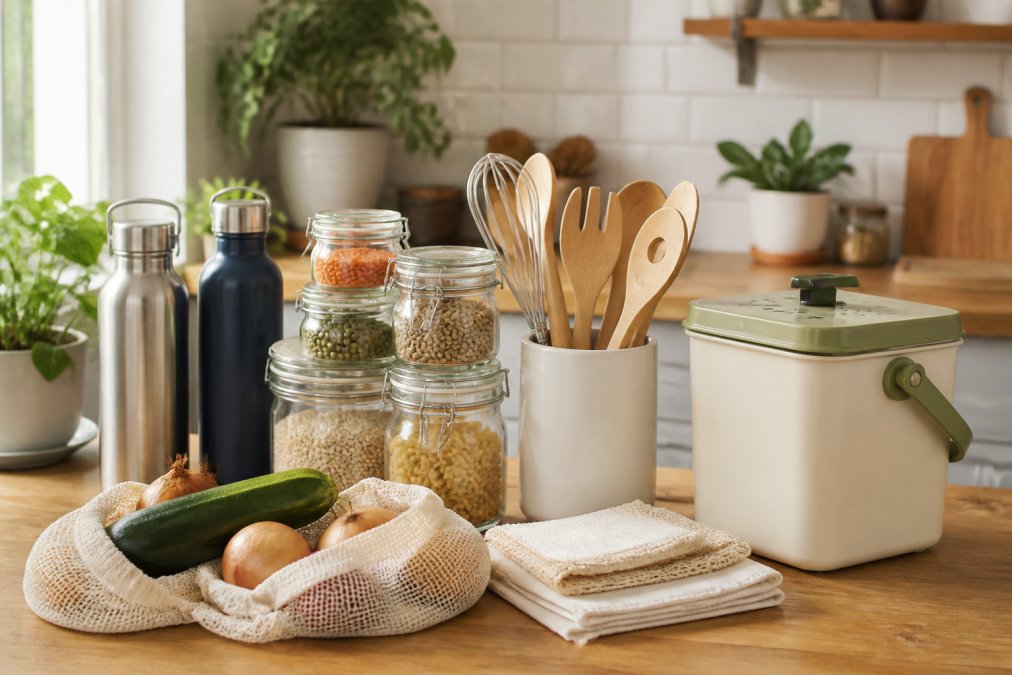
For beginners, the zero-waste kitchen is built on a few versatile essentials rather than a complete set of specialty tools. The core principle is to choose items that are durable, easy to clean, and replace multiple disposable products. You do not need to buy everything at once; start with two or three items and build from there.
The foundational kit includes a set of glass storage containers, a few cloth produce bags, a stainless steel water bottle, and a countertop compost bin. These four items address the most common sources of kitchen waste: food storage, produce shopping, beverages, and organic scraps. As you become comfortable, you can add items like beeswax wraps to replace plastic cling film and silicone baking mats to replace parchment paper.
A common mistake for beginners is purchasing a large "zero waste starter kit" and letting half of it go unused. Instead, buy items that match your actual habits. If you rarely pack a lunch, you do not need a bento box. The most sustainable product is the one you already own and use consistently.
Buy in Bulk and Use Refillable Systems
Buying in bulk is a strategy that reduces packaging waste and often lowers the cost per unit of food and household products. The key is to use your own reusable containers, filling them from large dispensers at stores that offer bulk sections. This applies to dry goods like rice and pasta, as well as liquids like soap and shampoo.
Before you shop, weigh your empty containers at the store's bulk counter and note the tare weight. Fill them with the product and pay based on the net weight. This system eliminates the need for single-use packaging entirely. For items you cannot find in bulk, choose the largest size available and portion it into reusable containers at home, which reduces the packaging-to-product ratio.
This approach extends beyond food. Many stores now offer refill stations for cleaning products and personal care items. By committing to bulk shopping and refillable systems, you are actively participating in a circular economy where materials are reused rather than discarded. World Wildlife Fund's tips for reducing household waste emphasizes that rethinking how we purchase everyday goods is critical to reducing resource consumption.
Master Recycling Habits and Contamination Prevention
Recycling is a critical component of waste diversion, but it only works when done correctly. Contamination occurs when non-recyclable items are placed in the recycling bin, which can ruin an entire batch of otherwise recyclable materials. Mastering your local recycling rules is an essential step in any effort to reduce household waste.
The most common contaminants are plastic bags, food-soiled paper, and greasy pizza boxes. Soft plastics like bags and wrappers should never go in curbside recycling; they jam the sorting machinery and often end up in the landfill anyway. Check your local municipality's website for a detailed list of accepted materials, as rules vary significantly by region.
A practical rule is "when in doubt, throw it out." Putting a questionable item in the recycling bin does more harm than good. Clean and dry your recyclables before placing them in the bin, as residue can contaminate other materials. Proper recycling habits are a form of resource conservation that ensures your efforts actually result in materials being reused.
Waste Reduction for Renters and Apartment Dwellers
Renters and apartment dwellers face unique challenges in reducing waste, but the core strategies remain effective with some adaptation. Limited space and lack of control over building infrastructure are common obstacles. This section addresses those specific constraints.
For composting without a yard, consider a small countertop bin with a charcoal filter for odor control. Some cities have drop-off points for food scraps at farmers markets, and a growing number of apartment buildings now offer compost collection as an amenity. If these options are unavailable, storing food scraps in the freezer until trash day prevents odors and pests.
Space constraints also affect bulk shopping. Without room for large containers, focus on the most impactful changes: refusing single-use plastics, using reusable bags, and mastering your building's recycling system. If your building's recycling is poorly managed, speak with your property manager about improving signage and bin placement. Tenant advocacy is a powerful tool for improving household waste management in multi-unit buildings.
Reduce Digital Waste and Household Efficiency
Digital waste is an often-overlooked component of household waste reduction. It refers to the energy consumed by devices that are left on standby, the physical waste from obsolete electronics, and the clutter of unused digital files that require energy for cloud storage. Addressing this reduces both your carbon footprint and your electricity bill.
Start by unplugging electronics that draw phantom power when not in use, such as phone chargers and entertainment systems. Use power strips to make this easier, switching them off when you leave the house. When upgrading devices, properly recycle your old electronics through certified e-waste programs rather than throwing them in the trash.
Household efficiency extends to your choices as a consumer. Opting for durable, repairable products over cheap, disposable alternatives is a form of waste prevention. At The Daily Drop by Ed Rivera, we offer a curated selection of household essentials and smart cleaning tools that are built around products designed for repeated use and long-term value. Choosing quality items that last is the ultimate waste reduction strategy, as it prevents the cycle of constant repurchasing and disposal. This approach to sustainable living saves money over time and reduces the demand for new resources.
Reducing household waste is a journey of consistent, small decisions rather than a single dramatic change. Start with the waste audit to understand your starting point, then implement the strategies that address your biggest waste categories. Whether you are a homeowner or a renter, the principles of prevention, reuse, and proper recycling apply universally. For affordable, durable household essentials and smart tools that support a low-waste lifestyle, explore the regularly updated deals at The Daily Drop by Ed Rivera. Get started with The Daily Drop and make your next purchase a sustainable one.
Frequently Asked Questions
What are the most impactful ways to reduce household waste?
The highest-impact actions are meal planning to prevent food waste, composting organic waste, eliminating single-use plastics, and buying in bulk with reusable containers. These four strategies address the largest waste streams in most households. Start with whichever aligns with your lifestyle, then layer in others.
How can reducing household waste help me save money on groceries?
Meal planning eliminates impulse purchases and spoilage. Buying in bulk reduces per-unit costs. Composting and repurposing leftovers stretch your food budget further. When you plan meals, shop strategically, and use what you buy, you cut both waste and spending.
What zero waste kitchen essentials do beginners actually need?
Start with glass storage containers (replace plastic), reusable cloth bags for produce, a stainless steel water bottle, and a small countertop compost bin. Add bamboo or metal utensils and a refillable bottle for cleaning products. You don't need everything at once. Buy one or two items at a time as budget allows. The Daily Drop offers affordable versions of these essentials with rotating deals.
How do I reduce plastic usage at home without spending a lot?
Replace single-use plastics gradually: use cloth bags instead of plastic, refill bottles instead of buying new ones, choose products with minimal packaging, and buy in bulk to reduce packaging waste overall. Soft plastics can be collected at many retail locations for recycling. Transition slowly, you don't need to replace everything immediately. Each swap saves money over time and reduces environmental impact.
This article was written using GrandRanker