

Table of Contents
- Why Saving on Everyday Essentials Matters
- Build a Realistic Budget and Track Your Spending Habits
- Cash Back Apps for Everyday Shopping
- Bulk Buying vs Individual Items: When Size Matters
- How to Meal Plan on a Budget
- Use Coupons, Price Matching, and Store Loyalty Programs
- Choose Store Brands Over Name Brands
- Prevent Impulse Purchases and Practice Deferred Gratification
Last Updated: August 7, 2026
Why Saving on Everyday Essentials Matters
Most households overspend on necessities without realizing how much money slips away through small purchasing decisions. Small percentage savings on frequently purchased items compound into hundreds or thousands of dollars annually. At The Daily Drop by Ed Rivera, we understand that financial wellness starts with controlling what you spend on items you buy regularly.
Learning to save on everyday essentials requires shifting from reactive shopping to strategic purchasing. This means building awareness of your spending patterns, understanding where deals exist, and using tools designed to reward smart buying.
Build a Realistic Budget and Track Your Spending Habits
Creating a realistic budget starts with understanding exactly what you currently spend on everyday essentials. Tracking your spending for even one month reveals patterns you can't see any other way.
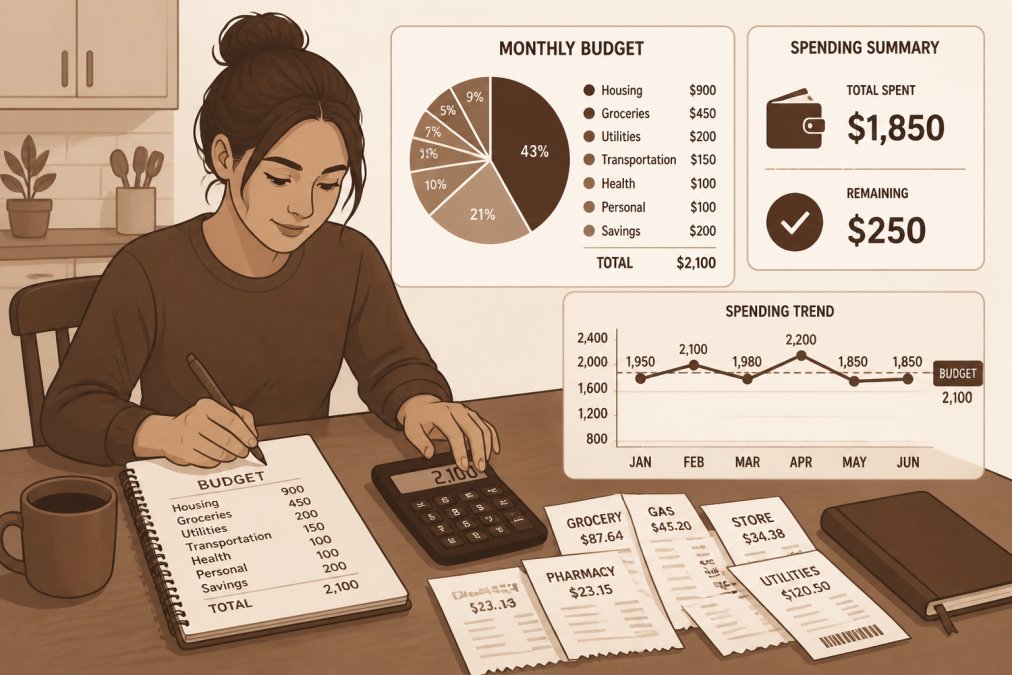
A practical approach is using a budgeting app that syncs with your bank account and categorizes transactions automatically. You Need A Budget (YNAB) uses a zero-based budgeting method where you assign every dollar a specific purpose before spending it. YNAB users report saving an average of $600 in their first two months, with many achieving over $6,000 in annual savings once they establish the habit.
Groceries, household supplies, and personal care items typically represent 15-25% of household budgets. Even a 10-15% reduction in these categories creates meaningful savings without dramatic lifestyle changes. Set a realistic target of cutting 20% off everyday essentials spending, achievable through the strategies below. Trying to cut 40% often leads to frustration and abandoning the effort.
Cash Back Apps for Everyday Shopping
How Cashback Works
Cashback rewards programs return a percentage of your purchase amount directly to you. When you buy through a cashback app, the retailer pays a commission that's partially shared with you. This means you're getting paid for shopping at stores you'd visit anyway.
Top Cashback Tools and Apps
Rakuten partners with over 3,500 retailers both online and in physical stores. The free app earns cashback through the website, mobile app, browser extension, or in-store by linking your payment method. Rakuten pays out earnings every three months via check or PayPal, with rates varying by retailer from 1-2% to 10% or higher during promotions.
Honey (by PayPal) automatically finds and applies coupon codes at checkout across over 30,000 shopping sites. The browser extension works silently in the background, testing available codes and applying the best one. Honey Gold rewards accumulate as you shop and can be redeemed for gift cards. The Droplist feature tracks price drops on items you're considering, sending notifications when prices fall.
Ibotta focuses on everyday grocery purchases and essentials. You earn cashback by submitting receipts or linking loyalty accounts to grocery stores and retailers. Earnings can be withdrawn via PayPal, Venmo, or gift cards.
Fetch Rewards simplifies the process: scan any grocery receipt and earn points. You don't need to activate offers beforehand or link accounts. Points accumulate quickly and can be redeemed for gift cards to major retailers.
Combine multiple cashback apps for maximum benefit. Use Rakuten or Honey for online shopping and specific retailers. Use Ibotta or Fetch for groceries and household supplies. Together they create a system where you're earning rewards on most everyday purchases.
Bulk Buying vs Individual Items: When Size Matters
The Math Behind Bulk Purchases
Bulk buying only saves money when the per-unit cost is genuinely lower than individual purchases. Comparing price per unit, the cost per ounce, per item, or per unit of measurement, is the only way to know if bulk actually saves money.
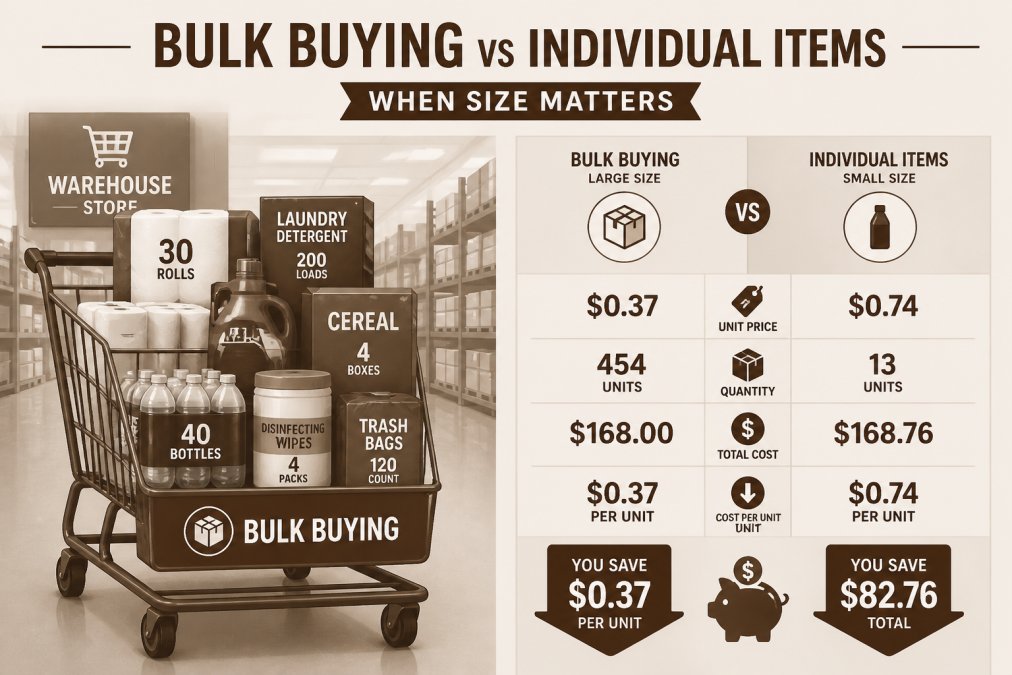
The bulk buying strategy works best for non-perishable items you use regularly: canned goods, dry goods, cleaning supplies, personal care items, and paper products. Fresh produce and dairy with short shelf lives are riskier because you might waste product before using it.
Storage space is a practical constraint most people underestimate. Buying more than you can reasonably consume before expiration defeats the savings. Be realistic about your storage capacity before committing to bulk purchases.
Where to Buy in Bulk
Warehouse clubs like Costco Wholesale and Sam's Club offer bulk discounts. Costco's Executive Membership costs $130 annually and provides a 2% reward on eligible purchases, up to $1,000 annually. Sam's Club Plus Membership costs $110 per year and offers 2% Sam's Cash on qualifying purchases, up to $500 annually. The membership fee only makes sense if you'll spend enough to justify it. Calculate your expected annual purchases and verify the membership pays for itself before joining.
Many regular grocery stores offer bulk sections where you can buy exact quantities of grains, nuts, spices, and dried goods. Some retailers also offer bulk pricing when you purchase multiple units, making the per-unit cost competitive with warehouse clubs.
How to Meal Plan on a Budget
Meal planning eliminates impulse purchases and food waste because you buy only ingredients you'll actually use. Start by identifying meals your household enjoys that use overlapping ingredients. Planning meals around what's on sale that week further reduces costs.
Write a detailed shopping list organized by store section. Shopping from a list reduces impulse purchases and prevents buying duplicates. Many people find meal planning actually reduces their shopping time because they know exactly what they need.
Batch cooking on weekends stretches your budget further. Making a large pot of chili, soup, or grain-based dish provides multiple meals from a single cooking session. This approach also reduces the temptation to buy convenience foods or order takeout on busy evenings.
Use Coupons, Price Matching, and Store Loyalty Programs
Digital coupons offer better value than paper coupons because they're personalized to your shopping patterns. Kroger's Plus Card program offers personalized deals and digital coupons based on your purchase history. The free loyalty program provides fuel points for every dollar spent on groceries and pharmacy items.
Price matching guarantees that if you find a lower price at a competitor, the store will match it. Understanding each store's specific policy helps you maximize this benefit.
Coupon stacking, combining manufacturer coupons with store coupons and loyalty program discounts, creates significant savings on specific items. A product might have a 50-cent manufacturer coupon, a digital coupon from the store's loyalty program, and be on sale. Combining all three creates substantial savings.
Store loyalty programs are worth joining for any store where you shop regularly. Most are free and provide personalized offers, exclusive discounts, and rewards.
Choose Store Brands Over Name Brands
Store-brand alternatives cost 20-40% less than name brands for functionally identical products in many categories. The quality differences are often negligible for basic items like flour, sugar, canned vegetables, and household cleaning supplies. Store brands typically come from the same manufacturers as name brands, just in different packaging.
Testing a store-brand alternative with a small purchase helps you determine if quality is acceptable for your needs. Many people find store brands work perfectly fine for 80% of their purchases and only stick with name brands for specific items where they notice a real difference.
Bulk buying store brands amplifies the savings. This combination strategy creates the most aggressive pricing available to typical shoppers without using coupons or cashback programs.
Prevent Impulse Purchases and Practice Deferred Gratification
Impulse purchases are the silent budget killer. Items bought without planning typically cost 15-25% more per unit than planned purchases because you're not comparing prices or waiting for sales.
The practical solution is creating friction between the impulse and the purchase. Don't shop when hungry, tired, or stressed. Remove saved payment methods from shopping apps so you must consciously enter payment information. Use a shopping cart feature to add items, then wait 24 hours before checking out.
Deferred gratification, waiting before buying non-essential items, reveals which purchases are genuine wants versus fleeting impulses. Many items you think you need urgently become irrelevant within a week if you delay the purchase.
A practical framework is the 30-day rule for non-essential purchases. When you want something that isn't an immediate necessity, wait 30 days. If you still want it after a month, consider the purchase. Most impulse wants fade within days.
The Daily Drop by Ed Rivera makes strategic purchasing easier by curating deals on items you actually need. Rather than browsing endlessly for bargains, you can check back regularly for new finds across automotive, apparel, household essentials, and everyday must-haves.
Saving on everyday essentials isn't about sacrificing quality or enjoyment, it's about being intentional with your spending. The combination of budgeting, cashback rewards, strategic bulk buying, meal planning, and loyalty programs creates a comprehensive approach that reduces what you spend without requiring extreme measures. Start with one or two strategies that fit your lifestyle, build the habit, then add additional approaches as you develop your savings system. Over time, these practices become automatic, and the financial benefit compounds into meaningful progress toward your broader financial goals.
Frequently Asked Questions
What are the most effective ways to save on everyday essentials?
The most effective strategies combine multiple approaches: track your spending to understand where money goes, use cashback apps like Rakuten and Ibotta on regular purchases, buy store-brand alternatives instead of name brands, meal plan to reduce food waste, and use coupons or price matching at checkout. Bulk buying through warehouse clubs like Costco or Sam's Club works well for larger households. Start with tracking and budgeting, then layer in cashback and loyalty programs for compounding savings.
How do cash back apps for everyday shopping actually save you money?
Cashback apps earn you a percentage back on purchases you're already making. Rakuten offers cashback at over 3,500 partner stores with rates varying by retailer. Ibotta focuses on groceries and everyday items through receipt scanning. Fetch Rewards rewards you simply for scanning any grocery receipt. These apps are free to use and payments go directly to your account via PayPal or gift cards. The key is consistency: small percentages add up significantly over months if you use the same app regularly for your regular shopping.
Is bulk buying vs individual items actually cheaper for everyday essentials?
Bulk buying is cheaper per unit for most items, but only if you use what you buy before it expires. A family of four buying groceries in bulk at Costco or Sam's Club typically saves 20-30% compared to traditional grocery stores. However, single people or small households may waste food and lose savings. Calculate the price per unit before buying. For non-perishables like cleaning supplies or paper products, bulk buying almost always wins. Membership fees (Costco at $130/year, Sam's Club at $110/year) require spending enough to justify the cost, typically around $2,500 annually.
How do I know if a store brand is actually a good quality alternative to name brands?
Store brands are often made by the same manufacturers as name brands but without premium packaging or marketing costs. For most everyday essentials like cleaning supplies, paper products, and basic groceries, quality is nearly identical. Start by comparing labels and ingredient lists. Test store brands on lower-risk items first (paper towels, flour, canned goods). Read reviews for specific products. Many shoppers find store brands work just as well while saving 20-40% per item. The main exceptions are specialized items where brand reputation matters more, like certain medications or specific appliances.
This article was written using GrandRanker