

Table of Contents
- Quick Comparison: Top Emergency Repair Tools for Cars
- 1. Portable Jump Starters: Fast Battery Recovery Without Cables
- 2. Tire Pressure Gauges & Emergency Inflation Kits
- 3. Multitools & Socket Sets: Compact Repair Capability
Best Emergency Repair Tools for Cars: 2026 Guide
Last Updated: July 20, 2026
Quick Comparison: Top Emergency Repair Tools for Cars
When your car breaks down on the highway at midnight, quality emergency repair tools become your lifeline. Roadside breakdowns affect millions of drivers annually, yet most vehicles lack adequate emergency equipment. This guide covers essential tools every driver should keep accessible, from portable jump starters to tire inflation systems and socket sets.
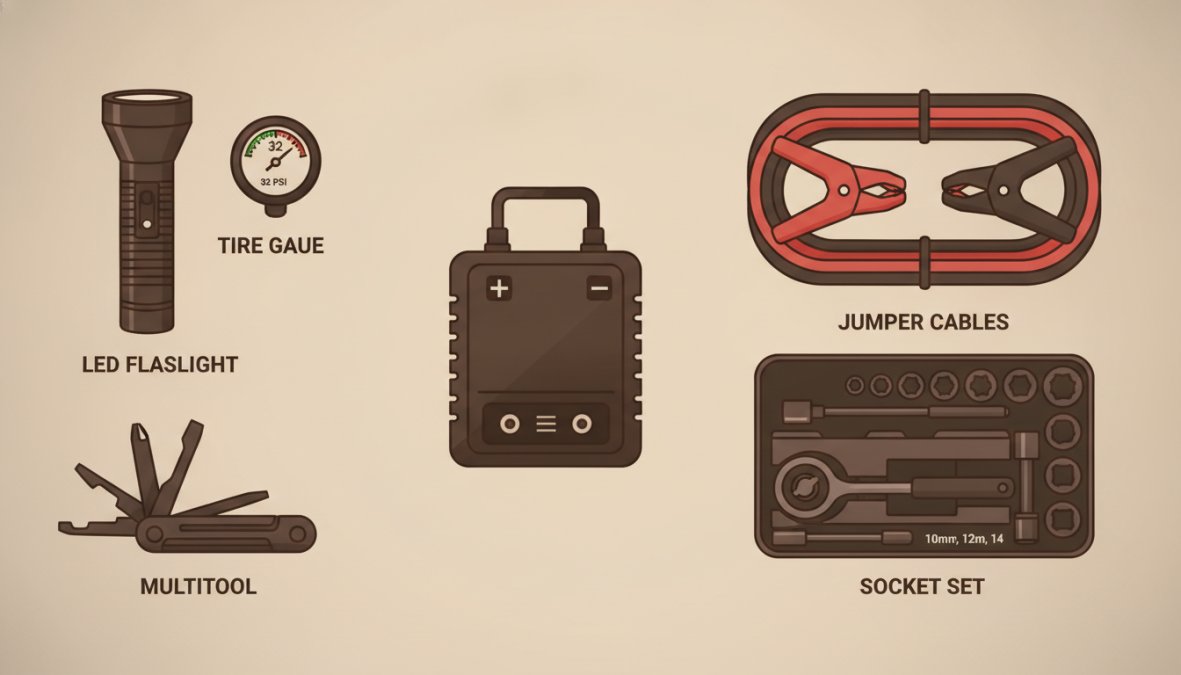
| Tool Category | Best Option | Key Advantage | Ideal For |
|---|---|---|---|
| Jump Starters | NOCO Boost Plus GB40 | 1,000-amp capacity, compact design | Dead batteries on gas/diesel engines |
| Tire Inflation | Slime Smart Spair Kit | Puncture sealing + inflation combined | Quick roadside tire repairs |
| Portable Compressor | VIAIR 88P | 120 PSI output, 12V powered | Tire pressure maintenance |
| Multitools | Leatherman Wave+ | 18 integrated tools, 25-year warranty | General repairs and adjustments |
| Socket Sets | Stanley 65-Piece Kit | Comprehensive SAE/metric range | DIY mechanics and emergencies |
1. Portable Jump Starters: Fast Battery Recovery Without Cables
The NOCO Boost Plus GB40 delivers 1,000 amps of starting power in a package smaller than a paperback book, eliminating the need for jumper cables or another vehicle. This lithium-ion jump starter charges fully in under two hours and holds its charge for months. UltraSafe technology prevents sparks and reverse-polarity damage, critical when working in poor lighting conditions.
The built-in 100-lumen LED flashlight with seven modes, including emergency strobe, and a 2.1A USB port for charging phones make this a multi-purpose emergency device. At approximately $99.95, it costs less than a single professional tow call.
The GB40 handles gas engines up to 6 liters and diesel engines up to 3 liters, sufficient for most sedans and compact SUVs but inadequate for heavy trucks.
2. Tire Pressure Gauges & Emergency Inflation Kits
Most tire failures stem from improper pressure rather than punctures. A quality tire pressure gauge costs under $20 and prevents underinflation problems: reduced fuel efficiency, tire overheating, and blowouts.
The Slime Smart Spair Emergency Tire Repair Kit combines tire sealant and 12V inflation in one tool. The sealant seals punctures up to 1/4 inch instantly while the compressor inflates to proper pressure in approximately 15 minutes, no jacks or tire removal required. The non-toxic, water-soluble formula won't damage TPMS sensors. At roughly $40, it delivers genuine roadside peace of mind.
The EPAuto 12V Digital Tire Inflator offers a lighter alternative for routine pressure maintenance, with digital display and auto shut-off at $43-$69. The VIAIR 88P Portable Air Compressor delivers 120 PSI output for larger tires on SUVs and light trucks, with a 10-foot power cord and 16-foot air hose for reach in tight spaces.
3. Multitools & Socket Sets: Compact Repair Capability
The Leatherman Wave+ packs 18 tools into a 4-inch package: needle-nose pliers, wire cutters, 420HC blade, serrated knife, and saw. Every feature locks for safe operation, and the 25-year warranty reflects genuine durability.
This multitool excels for quick adjustments, stuck hose clamps, loose fasteners, frayed wires, but individual components don't match full-sized dedicated tools. For serious mechanical work, you'll need specialized equipment.
The Stanley 65-Piece Homeowner's Tool Kit provides broader capability with SAE and metric sockets, hex keys, screwdrivers, pliers, tape measure, and claw hammer in a carrying case. At $54-$68, it suits drivers facing unexpected repairs beyond simple adjustments and provides tools for years of maintenance.
Preparing for roadside emergencies means carrying tools matched to your vehicle type and mechanical confidence. A portable jump starter, tire repair kit, multitool, and basic socket set cover 90% of common breakdowns. Check your trunk contents, most drivers discover they're missing at least one essential item.
Frequently Asked Questions
What are the most essential emergency repair tools to keep in a car?
A portable jump starter, tire pressure gauge, basic multitool, and jumper cables form the foundation of emergency preparedness. Add a flashlight, first aid kit, and reflective vest for roadside safety. For longer trips, include a tire repair kit and socket set. The best emergency repair tools depend on your vehicle type and driving habits, but these five items handle 80% of common breakdowns without requiring professional help.
Is a portable jump starter better than traditional jumper cables?
Portable jump starters offer convenience and safety advantages: they work without another vehicle, require no setup, and are safer for newer cars with sensitive electronics. Jumper cables are lighter, cheaper, and require no charging. For emergency roadside assistance, a portable jump starter is more reliable if you're alone. Many drivers keep both, jumper cables as backup and a jump starter as the primary solution.
How do I choose between a multitool and a full mechanics tool set?
Multitools like the Leatherman Wave+ offer portability and versatility for quick fixes and unexpected situations. Full mechanics tool sets (like Stanley's 65-piece kit) provide better leverage and durability for serious repairs but require more storage space. For emergency roadside use, a quality multitool is practical. For home garage work, a socket set with proper storage is more effective. Many vehicle owners carry a multitool in the car and keep a full set at home.
What weight and storage considerations matter for emergency car tools?
Excess weight in your vehicle reduces fuel efficiency and increases tire wear. Store emergency tools in a compact, organized case rather than loose items. Prioritize lightweight, multi-function tools over single-purpose ones. A portable jump starter weighs less than a full tool kit but delivers critical functionality. Keep tools in the trunk or under a seat where they're accessible but don't add unnecessary weight to the cabin or affect vehicle performance.
Should I buy a pre-assembled emergency kit or build my own?
Pre-assembled kits offer convenience and ensure you don't forget essentials, but may include tools you don't need for your specific vehicle. Building your own kit lets you customize based on your car's requirements, driving patterns, and climate. For example, winter drivers need different gear than desert drivers. Start with a quality portable jump starter and tire repair kit, then add vehicle-specific tools based on past problems or your vehicle's manual recommendations.
This article was written using GrandRanker