

Table of Contents
- The Core Financial Benefits of Buying Household Products in Bulk
- Best Household Items to Buy in Bulk
- How to Save Money on Groceries and Household Items in 2026
- Bulk Buying Storage Tips for Small Spaces
- Beyond Savings: Environmental and Lifestyle Benefits
- The Real Downsides of Bulk Buying and How to Avoid Them
- Conclusion: Making Bulk Buying Work for Your Home
Last Updated: August 17, 2026
The Core Financial Benefits of Buying Household Products in Bulk
Buying household products in bulk reduces your monthly spending by accessing economies of scale that retailers pass to bulk buyers. A single roll of paper towels costs more per sheet than a bulk pack of 12 rolls; a small bottle of laundry detergent carries a higher per-ounce cost than a larger container. This difference compounds quickly across annual household consumption.
Bulk purchasing also reduces shopping frequency, minimizing impulse purchases that leak household budgets. You walk in for toilet paper and walk out with unplanned items; bulk buying at home removes this urgency. Additionally, bulk purchasing lets you lock in pricing when items are on sale, smoothing out price fluctuations throughout the year for non-perishable items.
Best Household Items to Buy in Bulk
The best bulk candidates are items you use regularly, that have long shelf lives, and that don't require excessive storage space.
Non-Perishable Essentials Worth Stocking
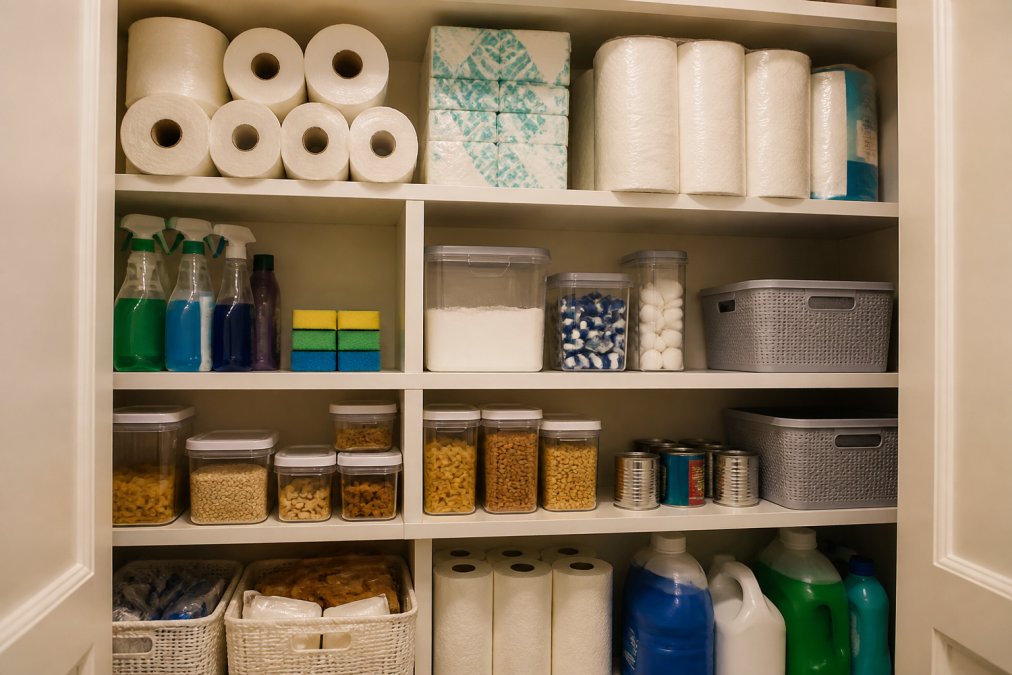
Paper products top this list because they're used constantly, take up predictable storage space, and never expire. Paper towels, toilet paper, and facial tissues are ideal for bulk purchasing.
Canned goods represent another excellent bulk opportunity, particularly for items your family eats regularly. Canned vegetables, beans, and soups can be purchased in cases and stored efficiently. The key is buying items you actually consume.
Dry goods like rice, pasta, flour, and sugar are bulk-buying classics with indefinite or very long shelf lives. If your family cooks regularly, buying these items in bulk reduces both spending and shopping frequency.
Canned and bottled beverages also benefit from bulk purchasing if you have adequate storage space. The per-bottle cost drops noticeably when you buy by the case.
Toiletries and Personal Care Products
Toiletries are among the highest-value items to buy in bulk because most people use them daily with predictable expiration dates. Shampoo, conditioner, body wash, and soap purchased in larger quantities often yield per-unit prices 20-30% lower than standard packaging.
Toothpaste, deodorant, and razors are similarly good bulk candidates with steady consumption rates. Feminine hygiene products, diapers, and baby wipes are particularly valuable bulk buys for families that need them, representing significant portions of household budgets.
Cleaning Supplies and Laundry Detergent
Cleaning supplies are perhaps the most obvious bulk-buying category. Laundry detergent, dish soap, surface cleaners, and disinfectants are used consistently with long shelf lives. A concentrated formula in a large bottle delivers far better value than individual smaller bottles.
Trash bags and storage bags represent another high-value bulk category with no expiration concerns and significant per-unit savings when purchased in cases.
How to Save Money on Groceries and Household Items in 2026
Beyond simply buying in bulk, specific strategies amplify savings and prevent common pitfalls.
Understanding Unit Price vs. Total Cost
The biggest mistake when buying household products in bulk is focusing on total price rather than unit price. A 48-pack of toilet paper at $20 costs about $0.42 per roll, while a 12-pack at $6 costs $0.50 per roll. The bulk option saves 16% per roll, compounding across a year of use.
Most retailers display unit prices on shelf labels. If not, divide total price by the number of units. Track unit prices for items you buy regularly to develop intuition about genuine deals and notice pricing seasonality patterns.
Avoiding Impulse Purchases When Buying in Volume
Bulk buying can increase spending if you're undisciplined. The solution is shopping with a specific list and sticking to it. Before purchasing, know exactly what you need and in what quantities. Track your consumption for a month to understand realistic usage rates; a family of four uses roughly one roll of paper towels per week, translating to 52 rolls annually.
Avoid shopping when hungry, tired, or stressed, as these states lower resistance to impulse purchases. Set a budget for bulk purchases before shopping to prioritize items that genuinely deliver value.
Bulk Buying Storage Tips for Small Spaces
One of the biggest barriers to bulk buying is storage space. The solution is buying strategically and organizing efficiently.
Organizing Inventory Without Clutter
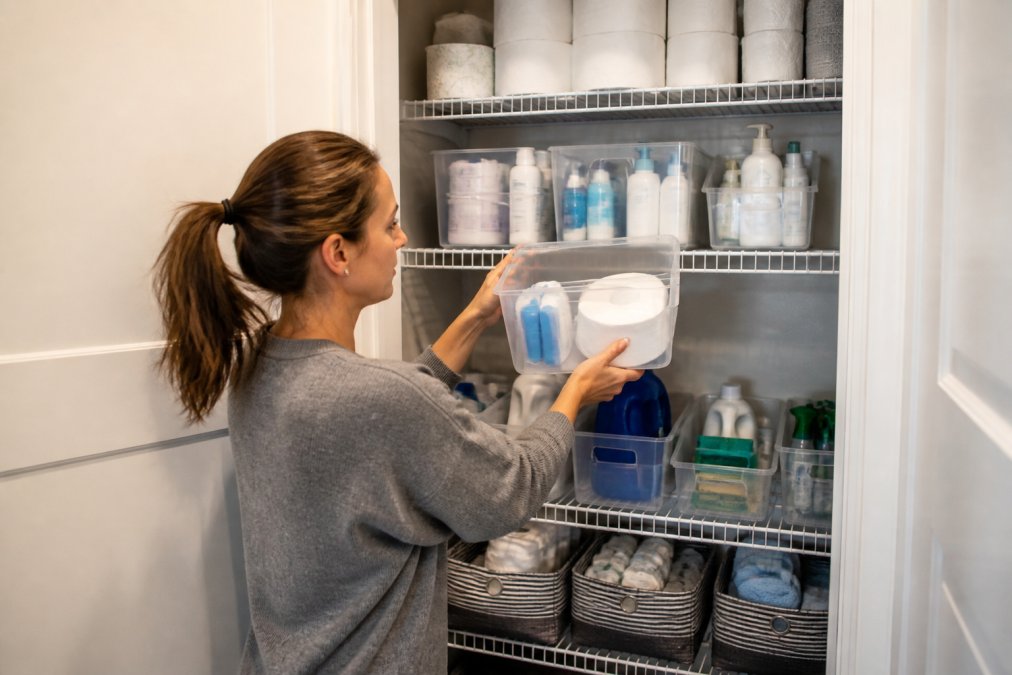
Vertical storage maximizes usable space without consuming floor area. Wall-mounted shelving units, over-the-door organizers, and stackable clear storage containers compress items efficiently while allowing visibility. Labeling with purchase dates helps you use older stock first and prevents waste.
Keep frequently used items in accessible spots, under the sink, pantry front sections, or eye-level shelves. Reserve harder-to-reach spaces for items used less frequently.
Managing Shelf Life and Expiration Timelines
Paper products and non-perishable dry goods essentially don't expire, though they can degrade over very long periods in humid environments. Cleaning supplies typically have two-to-three-year shelf lives. Toiletries have more variable timelines: shampoo and body wash last two to three years; toothpaste one to two years.
Buy quantities you'll realistically use within the product's effective lifespan. If you live alone and buy a year's supply of laundry detergent, you'll use it faster than it degrades. Calculate your household's consumption rate and buy accordingly.
Beyond Savings: Environmental and Lifestyle Benefits
Bulk purchasing reduces packaging waste substantially. Instead of buying 12 individual packages, you buy one larger package, meaning 11 fewer cardboard boxes or plastic wraps entering your waste stream.
Fewer shopping trips reduce your carbon footprint. Each trip involves transportation creating emissions; bulk buying reduces the number of trips needed to maintain household supplies.
Bulk buying also simplifies your life. You spend less time shopping, are less likely to run out of essentials unexpectedly, and avoid decision fatigue by making purchasing decisions once rather than repeatedly.
The Real Downsides of Bulk Buying and How to Avoid Them
Bulk buying requires more upfront cash than buying smaller quantities, which may strain tight budgets despite long-term savings. Storage space limitations prevent some households from benefiting. Quality degradation is genuine for some products; cleaning products may become less potent, spices lose flavor, and some foods develop off-tastes after extended storage.
Impulse buying is the psychological downside. Bulk buying environments encourage larger purchases. The solution is buying strategically: purchase only items you use regularly in quantities you'll consume within the product's useful life. Don't force inappropriate storage. Calculate consumption rates before buying and shop with a list.
Conclusion: Making Bulk Buying Work for Your Home
Buying household products in bulk is a practical strategy for reducing household expenses when done thoughtfully. Unit prices drop, shopping frequency decreases, and impulse purchases decline. Environmental benefits include less packaging waste and fewer shopping trips.
Success requires understanding which items justify bulk purchasing, calculating realistic consumption rates, and organizing storage efficiently. Not every product is a bulk-buying candidate, and not every household has the space or budget for large purchases. But for most families, strategic bulk buying delivers meaningful savings.
At The Daily Drop by Ed Rivera, we understand that smart shopping means getting real value for your money. Our curated selection of household essentials and daily deals makes it easy to find quality products at prices that make sense. Whether you're buying single items or exploring bulk pricing options on larger quantities, you'll find products selected for genuine value. Check back regularly as our inventory and deals change daily, and explore our bulk pricing options for items you use consistently throughout your home.
Frequently Asked Questions
Is buying household products in bulk really worth it?
Yes, for most households. Bulk buying reduces unit price significantly on non-perishable items like paper products, cleaning supplies, and toiletries. The savings compound over time, especially for families or households that use these items regularly. The key is buying items you actually use and have space to store. For budget-conscious shoppers, bulk purchasing typically cuts annual household spending by 15-30% on essentials.
What are the main downsides of buying household items in bulk?
Storage space is the biggest challenge, particularly in smaller homes or apartments. Bulk quantities of perishable goods can expire before use, wasting money. Impulse buying increases when purchasing in volume, and you risk stockpiling items that go unused. Upfront costs are higher, which strains tight budgets. Some items degrade in quality over time, especially if stored improperly. Start small with non-perishables you use regularly to test whether bulk buying fits your lifestyle.
Which household items offer the best savings when bought in bulk?
Non-perishable items deliver the highest value: paper products (toilet paper, paper towels), laundry detergent, dish soap, and cleaning supplies. Toiletries like shampoo, deodorant, and toothpaste also save significantly. Canned goods, dry pasta, rice, and shelf-stable pantry staples work well if you have proper storage. Avoid bulk buying fresh produce, dairy, and highly perishable items unless you have freezer space. Focus on items with long shelf lives and consistent household usage.
How do you manage bulk supplies without cluttering your home?
Use vertical storage: wall-mounted shelves, over-door organizers, and stackable bins maximize space in small areas. Keep an inventory system, even a simple spreadsheet, to track what you have and when items expire. Store bulk items in one designated area (closet, pantry, basement corner) rather than spreading them throughout your home. Use clear, labeled containers to protect items from moisture and pests. Rotate stock using the FIFO method (first in, first out) to prevent expiration and waste.
The real challenge isn't finding products to buy in bulk, it's organizing your purchases so they actually deliver the savings you expect. Start small, track your consumption, and expand your bulk-buying strategy as you discover what works for your household. Over time, you'll develop intuition about which items and quantities make sense for your situation, turning bulk buying from an occasional strategy into a sustainable part of how you manage your household budget.
This article was written using GrandRanker