

Table of Contents
- What It Means to Buy Wholesale Household Goods
- Cost Savings and Price Per Unit Advantages
- Best Household Items to Buy in Bulk
- Wholesale Club Membership Cost vs Savings
- How to Store Bulk Household Goods Effectively
- Environmental Impact and Waste Reduction
- Common Mistakes to Avoid When Buying Wholesale
- Conclusion
Last Updated: August 7, 2026
What It Means to Buy Wholesale Household Goods
Buying wholesale household goods means purchasing products in bulk directly from distributors or warehouse clubs at significantly reduced per-unit prices. Rather than shopping retail at standard grocery stores or drugstores, you're buying cases, pallets, or multi-packs of items like cleaning supplies, paper products, toiletries, and non-perishables that your household consumes regularly.
The core appeal is straightforward: the more you buy at once, the lower the price per unit. A single roll of paper towels costs more at a grocery store than when you buy a 12-pack at a warehouse club. Multiply that savings across dozens of products, and the math becomes compelling for budget-conscious households.
At The Daily Drop by Ed Rivera, we understand that smart shopping isn't about buying cheap, it's about buying smart. Our curated deals on household essentials help you find quality products at prices that make sense, whether you're stocking up on cleaning supplies or everyday necessities. Wholesale purchasing lets you control your own bulk strategy.
Wholesale distributors operate on different economics than retail. They handle massive volumes, lower their margins, and pass savings to buyers who commit to larger orders. Some require membership fees (Costco, Sam's Club). Others operate online without membership (Boxed). Still others cater specifically to businesses or nonprofits (DollarDays, WebstaurantStore). Each model has trade-offs worth evaluating before you commit.
Cost Savings and Price Per Unit Advantages
The financial case for buying wholesale rests on one principle: unit cost. A product's unit price is its total cost divided by the number of units. A 24-pack of soap bars costing $12 costs $0.50 per bar, compared to $1.29 for a single bar at a drugstore, a 61% difference on an identical product.
Households that buy wholesale report reducing their household essentials budget by 20-40% annually. Staples like toilet paper, paper towels, and laundry detergent typically offer 30-40% savings. Specialty items or fresh goods might save only 10-15%.
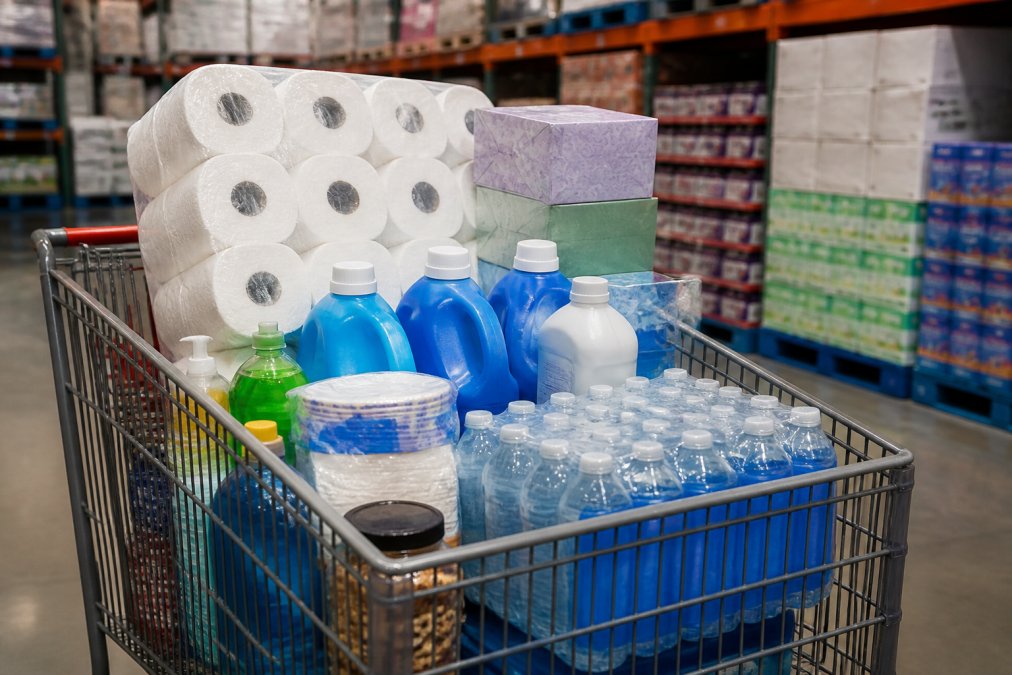
The membership cost question deserves direct attention. Costco Business Center charges $60 annually. Sam's Club Business Membership runs $50 yearly. For a family spending $200 monthly on household essentials, a 25% savings ($50/month) covers the annual membership fee in just one month. For smaller households, the math is tighter.
Boxed requires no membership fee, making it accessible immediately. You pay slightly higher per-unit prices than warehouse clubs, but you skip the annual commitment. This matters if you're testing whether wholesale works for your household before fully committing.
The psychology of wholesale buying trips up many people. A $0.40 roll of paper towels is only a deal if you actually use it before it expires. Buying wholesale works best when you're replacing products you already buy regularly, not stocking up on items you rarely use.
Best Household Items to Buy in Bulk
Not every household product benefits equally from bulk purchasing. Some items maintain quality indefinitely. Others degrade over time. Understanding which products actually make sense to buy wholesale separates smart bulk buyers from people drowning in excess inventory.
Non-Perishable Essentials
Paper products top the list for bulk buying because they're essential, non-perishable, and take up predictable storage space. Toilet paper, paper towels, and facial tissues have unlimited shelf life and create immediate, measurable savings.
Laundry detergent and dish soap follow similar logic. A bulk jug of laundry detergent costs significantly less per ounce than individual bottles. Storage is manageable, and these products last years in their original containers.
Canned and packaged foods represent another obvious category. Non-perishable goods like canned vegetables, beans, and pasta offer substantial per-unit savings. The key is actually eating them before expiration.
Cleaning and Personal Care Supplies
Cleaning supplies represent perhaps the most practical bulk category. Disinfectant wipes, bleach, floor cleaner, and bathroom spray have stable shelf lives measured in years. A bulk case of disinfectant wipes costs a fraction of buying individual containers.
Pet supplies deserve specific mention if you have animals. Pet food, litter, and treats represent recurring expenses that bulk buying handles well. A large bag of dog food costs significantly less per pound than smaller bags.
Wholesale Club Membership Cost vs Savings
The membership question determines whether wholesale buying makes financial sense for your household. This is a direct calculation you should run before committing.
Costco Business Center and Sam's Club Business Membership both charge annual fees ($60 and $50 respectively). For household use alone, you're evaluating whether the per-unit savings on regular purchases exceed the annual fee.
Calculate your typical monthly household essentials spending. Apply a realistic savings percentage (25-30% is conservative). Multiply by 12 months. If that annual savings exceeds the membership fee, wholesale makes financial sense. If your monthly essentials budget is $150 and you save 25%, that's $450 annually, easily covering a $50-60 membership fee.
Boxed's membership-free model eliminates this calculation. You pay slightly higher per-unit prices than warehouse clubs, but you avoid the annual commitment. This matters for households that want to test wholesale shopping without upfront investment.
The real decision hinges on commitment. Warehouse club memberships work best when you're a regular shopper who visits monthly or more frequently. Membership-free options like Boxed suit occasional bulk buyers or those testing the waters.
How to Store Bulk Household Goods Effectively
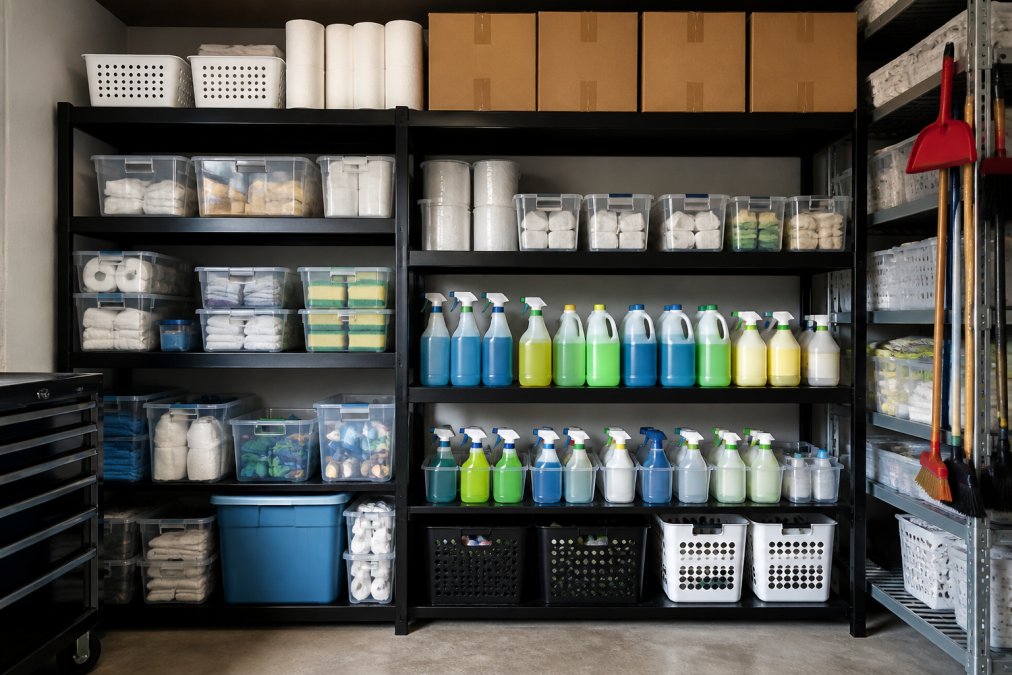
Buying wholesale only works if you can actually store what you buy. Smart storage logistics separate successful bulk buyers from frustrated ones.
Start by auditing your available space honestly. Basements, garage shelves, pantry cabinets, under-sink storage, and closet shelves all count. Measure these spaces and calculate your realistic bulk purchasing limit.
Organization systems matter more than you'd think. Clear plastic storage bins with labels transform chaotic bulk purchases into scannable inventory. Organize by category: paper products in one area, cleaning supplies in another, toiletries in a third. Label everything to prevent buying duplicates.
Rotation is critical for products with expiration dates. Use the FIFO method (first in, first out): place newly purchased items behind existing stock so older items get used first. This prevents discovering expired products months later.
Climate considerations affect storage longevity. Paper products, cleaning supplies, and most toiletries tolerate garage or basement storage well. Avoid extreme heat or humidity. A climate-controlled basement beats an uninsulated garage.
Vertical storage maximizes space efficiency. Wall-mounted shelving, over-the-door organizers, and stackable bins use otherwise wasted vertical space. This approach works especially well for paper products and cleaning supplies.
Environmental Impact and Waste Reduction
Buying wholesale household goods reduces environmental impact in measurable ways, though the relationship isn't automatic. Smart wholesale buying cuts packaging waste and transportation emissions. Careless wholesale buying can actually increase waste through spoilage and over-purchasing.
A case of 24 rolls of paper towels requires one shipping box and minimal packaging. Buying the same 24 rolls individually means 24 separate packages and significantly more total packaging material. Consolidated bulk purchases dramatically reduce packaging waste per unit.
One wholesale shopping trip replacing multiple retail trips means fewer vehicle miles, less fuel consumption, and lower carbon emissions per product purchased. A household that visits a warehouse club once monthly instead of visiting multiple stores weekly eliminates substantial driving.
The sustainability calculation assumes you actually use what you buy. If you purchase bulk items that expire or spoil before consumption, you've created waste instead of eliminating it. Wholesale buying only reduces environmental impact when purchased items are actually consumed.
Common Mistakes to Avoid When Buying Wholesale
The biggest mistake is buying products you don't regularly use just because the per-unit price is compelling. Wholesale works best when you're buying products already in your regular rotation.
Underestimating storage requirements trips up many bulk buyers. They purchase enthusiastically, then discover they've run out of space. Measure your storage space before committing to large purchases.
Ignoring expiration dates wastes money and creates waste. Some bulk items have legitimate expiration concerns. Non-perishable items like paper products and many cleaning supplies last years, but some products still degrade over time.
Failing to compare actual per-unit prices across options leads to false savings. A warehouse club might offer better pricing on some items while Boxed or The Daily Drop by Ed Rivera offers better deals on others.
Membership fee blindness costs money. Calculate whether your expected savings justify the fee for your actual usage pattern, not your aspirational usage pattern.
Buying wholesale without a shopping list leads to impulse purchases that inflate costs. Without a predetermined list of needed items, you'll purchase products you don't actually need.
Conclusion
Buying wholesale household goods works when you approach it strategically. Calculate your actual storage capacity. Compare per-unit prices across options. Purchase products you already use regularly. Track what you buy and consume it before expiration. The Daily Drop by Ed Rivera offers curated deals on household essentials with bulk pricing available on many products, making it easy to find quality items at competitive prices. Start with one or two product categories, paper products and cleaning supplies are safest, track your actual savings, then expand if the math works for your household.
Frequently Asked Questions
Is it actually cheaper to buy household goods in bulk?
Yes, bulk purchasing typically reduces your per-unit cost significantly. When you buy wholesale household goods, you're paying less per item because you're ordering in larger quantities. The savings vary by product category, non-perishable items like paper products, cleaning supplies, and toiletries usually offer the highest per-unit discounts. However, you need to factor in membership fees (if applicable) and storage space to determine your true savings. For most households, buying bulk essentials pays off within the first few months of purchases.
What are the best household items to buy in bulk?
Focus on non-perishable items with long shelf lives and high consumption rates. Paper products (toilet paper, paper towels), cleaning supplies (detergent, disinfectant), toiletries (shampoo, toothpaste), and canned goods offer the best value when bought wholesale. Avoid bulk-buying perishable items unless you have freezer space or consume them quickly. Seasonal items, specialty products, and items you rarely use often lead to waste and spoilage, which negates savings.
How much money can you save by shopping at wholesale clubs?
Savings depend on your current shopping habits and membership tier. A typical household can save 20-40% on bulk purchases compared to retail prices, but you need to subtract membership fees. For example, if you spend $100 monthly on household essentials at retail prices, buying wholesale might cut that to $60-80. Over a year, that's $240-480 in savings. Membership fees range from free (Boxed) to $60 annually (Costco Business), so calculate whether your expected savings exceed the membership cost before joining.
How do you store bulk household items in a small home?
Prioritize vertical storage with shelving units, wall-mounted racks, and over-door organizers. Use clear, stackable containers to maximize space and track inventory. Store items in cool, dry areas away from direct sunlight to extend shelf life. Focus on buying only the bulk items you use most frequently, rather than trying to stock everything. Under-bed storage, pantry optimization, and garage shelving are practical solutions. If space is severely limited, consider ordering smaller quantities more frequently or joining a group buying co-op to share bulk purchases.
This article was written using GrandRanker